How to Create a 3D Logo: A Practical Guide (Plus Animation Ideas)
Learn how to create a 3D logo step-by-step, choose the right tools, customize branding, and export files for web and print.
Introduction to 3D logos
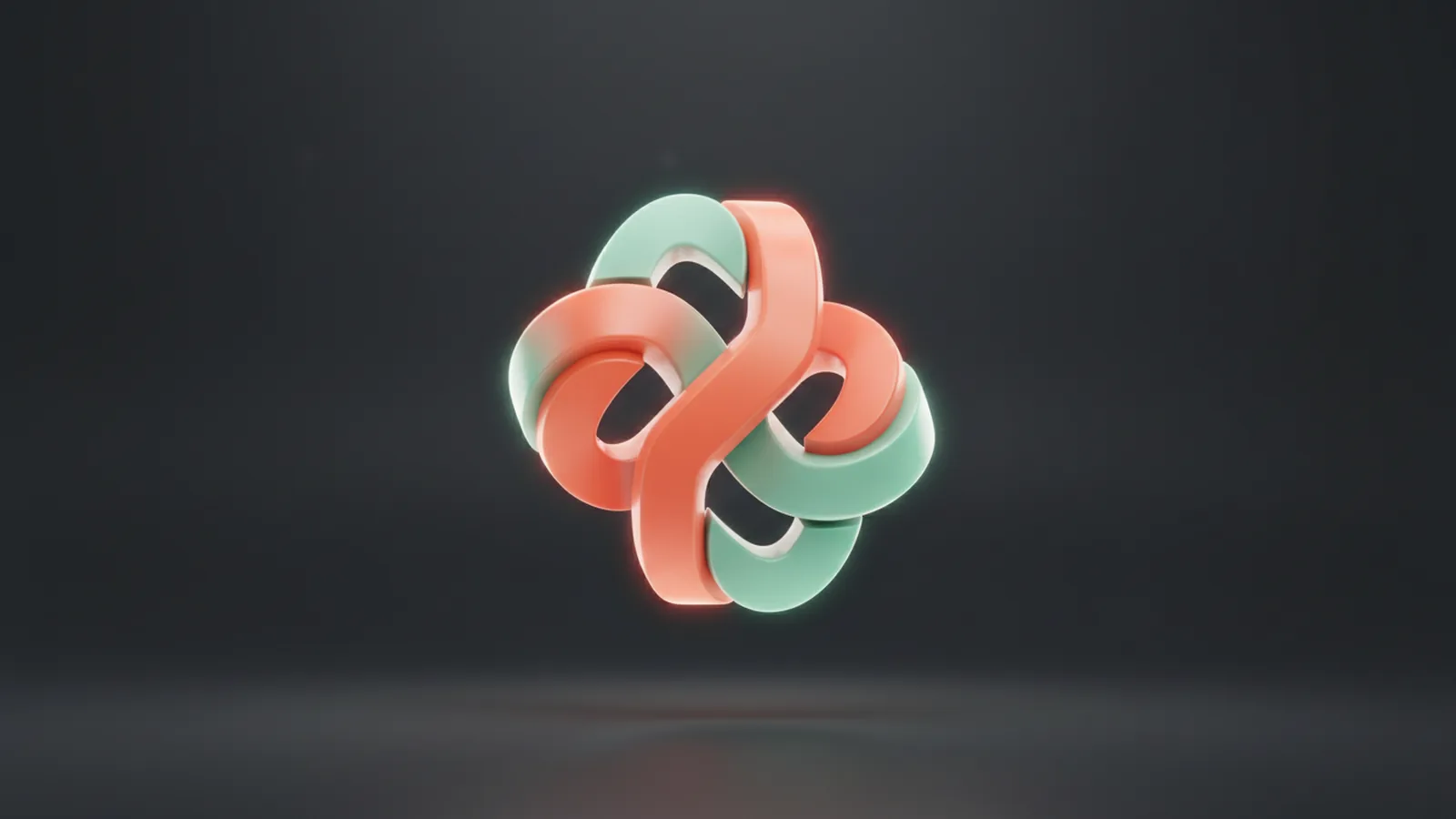
If you’re searching for how to create a 3D logo, the fastest path is to start with a strong flat mark, then add depth, lighting, and perspective until it feels “real” on screen. A great 3D logo isn’t just a thick extrusion - it's a controlled blend of shape, materials, and readable typography that stays recognizable at small sizes.
To design in 3D effectively, it helps to understand the core elements you’ll be working with. Most 3D logo builds combine an object (the shape), depth (extrusion or beveled edges), materials (metal, plastic, glass-like looks), and lighting (highlights, shadows, and ambient reflection). When these elements are balanced, the logo looks dimensional without becoming cluttered.
Finally, think about the use cases before you begin. A 3D business logo often needs multiple versions: a crisp web version, a transparent background mark for overlays, and print-ready files that avoid low-resolution textures. This mindset will influence how you export and whether you plan a 3D logo animation or keep it static.
Tools for creating 3D logos
You can create 3D logo design outcomes with several types of software - 3D-focused tools, vector tools, and motion/compositing tools. The best choice depends on whether you need a still logo only, a rotating logo loop, or full 3D logo animation with camera moves.
Here are practical options, grouped by what they’re best at:
- Illustrator: Strong for the initial vector geometry and typography. You can build clean paths, then take your design into a 3D/extrusion workflow or recreate effects with gradients and bevel-like styling.
- After Effects: Best for realistic-looking animation, rotation, and lighting-driven depth cues without heavy 3D modeling. If you want how to create 3d logo animation with smooth motion, After Effects is a common choice.
- Canva: Useful for fast prototyping and limited 3D-style effects, especially if you’re aiming for a simple “3D look” rather than complex materials. You can still produce a usable mark, then refine it elsewhere.
There are also “3D online” tools that offer how to create 3d logo online or how to create 3d logo online free workflows. These can be convenient for trying concepts quickly, but you’ll want to confirm export quality (resolution, vector vs raster output, and transparent background support) before committing to branding.
Step-by-step guide to designing a 3D logo
Below is a practical workflow for how to create a 3d logo from concept to final output. The key is sequencing: build readability first, then add dimensionality, and only then move into animation.
- Define the logo goal and constraints. Decide where it will be used (website header, app icon, social avatar, signage) and pick size targets. A logo that looks great at 1200px can still fail at 64px if the bevels are too wide.
- Create a strong flat version. Sketch or draft a simple icon/letterform with clear negative space. If you plan to do a 3D logo design in vector tools, start with clean shapes and consistent stroke/weight.
- Convert the artwork into depth. For many workflows, that means extrusion, bevels, and edge highlights. In motion workflows, you can simulate depth by combining layered shapes, shadows, gradients, and consistent perspective cues.
- Apply basic principles of 3D. Depth and perspective are your guardrails: keep the “far” faces smaller and darker, and align highlights to a single imaginary light source. Even if the effect isn’t physically accurate, consistency makes it believable.
- Test readability on multiple backgrounds. Check white, dark, and mid-tone backgrounds. If you can’t recognize it quickly, simplify the shapes or reduce the number of materials/colors.
Now connect the steps to software. For how to create 3d logo in illustrator, a common approach is to design the vector mark first and then use extrusion-like styling: bevel/emboss simulations, layered fills, and carefully tuned gradients. If you want a polished look with animation, you can bring the vector artwork into a compositing workflow and generate 3D cues via layers and effects.
For how to create 3d logo in after effects, build your depth using shape layers, masks, and shadow/highlight passes. Then add a camera-like movement or a rotation. After Effects shines when you can keep the motion smooth and the lighting cues consistent across frames.
Customizing your 3D logo for brand identity
Customization is where your logo becomes a brand asset rather than a generic “3D text effect.” Start by aligning your color theory and typography with the brand personality you want to communicate - premium, playful, tech-forward, or trustworthy.
Here are the main customization levers that matter most:
- Color: Pick a primary palette and limit the number of materials. If you use metallic highlights, keep them subtle and consistent; too many saturated reflections make the mark feel noisy.
- Typography in logos: If the 3D is applied to letterforms, preserve legibility by avoiding overly thin strokes and extreme bevels. Tight tracking can help keep the wordmark readable after extrusion.
- Layout: Maintain consistent spacing between icon and text. In 3D, depth can change perceived spacing, so verify alignment in the final perspective.
- Material look: Decide whether your logo feels like plastic, brushed metal, or matte paint. The choice should match your brand - then keep the shading model uniform.
If you’re also planning a how to create 3d logo animation, treat customization as an animation design problem. A color that looks perfect in a still can wash out during motion if the highlight angle changes too much. For rotation loops, keep the “hero” face readable for at least half the cycle.
Example animation considerations: a “spinning emblem” works well when the silhouette stays strong across angles. If your icon has small internal details, consider lowering their contrast so they don’t flicker as lighting changes during rotation.
Exporting and using your logo (web, print, and motion)
Exporting graphics correctly is what prevents 3D logo design from breaking after the render. A good strategy is to export multiple versions: static for everyday use, transparent assets for compositing, and motion formats for social and presentations.
Common export targets include:
| Use case | Recommended format | Notes |
|---|---|---|
| Website hero / social banner | PNG (high resolution) or JPG | Use a large pixel size (e.g., 1500–3000px wide) for clean scaling. |
| Overlay on video | Transparent PNG sequence or MOV/MP4 with alpha (if supported) | For After Effects workflows, test alpha handling in your editor. |
| Print applications | Vector file formats (when possible) or high-res PNG/PDF | Printers often prefer vector or 300 DPI output at final size. |
| Animated rotating logo | MP4 (loop) or GIF (small loops) | Keep duration short and loop seamlessly to avoid visible jumps. |
For logo customization assets, also consider consistency across resolutions. If your 3D look is created with raster effects (like blurred shadows), those can soften when resized. When possible, re-render at the target size or export a crisp version for icons.
Finally, if you’re working with user interfaces in mind (like a product onboarding screen or app splash), export an “icon-safe” version. That version often needs fewer highlights and less depth so it stays readable in small footprints.
Tips for effective 3D logo design (including rotation and animation)
Strong 3D logos follow a few repeatable design rules. The first is silhouette discipline: your icon should remain identifiable even if lighting is turned off or the logo is viewed from an extreme angle. The second is controlled depth - make sure bevels and extrusions support readability rather than overwhelming it.
If your goal includes how to make 3d spinning logo or how to create 3d logo in after effects, plan your rotation around the “best view” angle. A simple loop often works best when you rotate 0° to 360° with consistent spacing and no easing that causes speed changes at the seam. A practical trick is to match the first and last frame lighting so the loop feels continuous.
Here are examples of animation concepts you can implement:
- Classic spin: Rotate the logo around a vertical axis and keep the camera fixed. This is ideal for how to make 3d spinning logo used on social thumbnails.
- Spin with slight tilt: Combine rotation with a small pitch (e.g., 10–20°) to add depth without hiding the wordmark. This helps when you want a premium look and still keep readability.
- Light sweep: Animate the highlight position or light intensity while the logo rotates. This can sell the 3D feel even when the geometric depth is simulated.
To make sure your how to create 3d logo animation looks professional, watch motion coherence. Shadows should move logically with the object, and reflections shouldn’t “swim” across edges. If you’re aiming for how to create 3d logo animation in After Effects specifically, build the scene in layers and lock the lighting direction so every frame agrees.
With these practices, you can move from a concept to a finished 3D asset set - static for branding and animated for attention - without ending up with a logo that looks good only in one frame.
Frequently asked
- What’s the best way to create a 3D logo from scratch?
- Start with a clean flat design, then add extrusion/bevel depth and realistic shading cues. Test readability on light and dark backgrounds before finalizing and exporting.
- How do I make a 3D spinning logo that loops smoothly?
- Rotate from 0° to 360° and make sure the first and last frames match in lighting and position. Prefer simple axis rotation to avoid visible seams at the loop point.
- How to create 3D logo animation in After Effects?
- Build the logo using layered shapes or imported artwork, then apply rotation and consistent shadow/highlight cues. Keep camera movement minimal so the wordmark stays legible.
- Can I create a 3D logo in Illustrator?
- Yes—Illustrator is great for constructing vector paths and typography. You can simulate 3D styling with layered gradients and bevel-like effects, then enhance motion in a separate workflow if needed.
- What file formats should I export for a 3D business logo?
- Export high-resolution PNGs for web, transparent assets for overlays, and vector formats when possible for print. For animation, use MP4 for smooth looping and consider a GIF only for small previews.
- Is it worth using 3D online tools or free options?
- They’re great for quick prototyping and testing styles. Before committing, verify export quality, transparency support, and whether you can obtain print-ready or scalable assets.